2026: Judgement of Paris + 50 - Results and Event Report
The Event
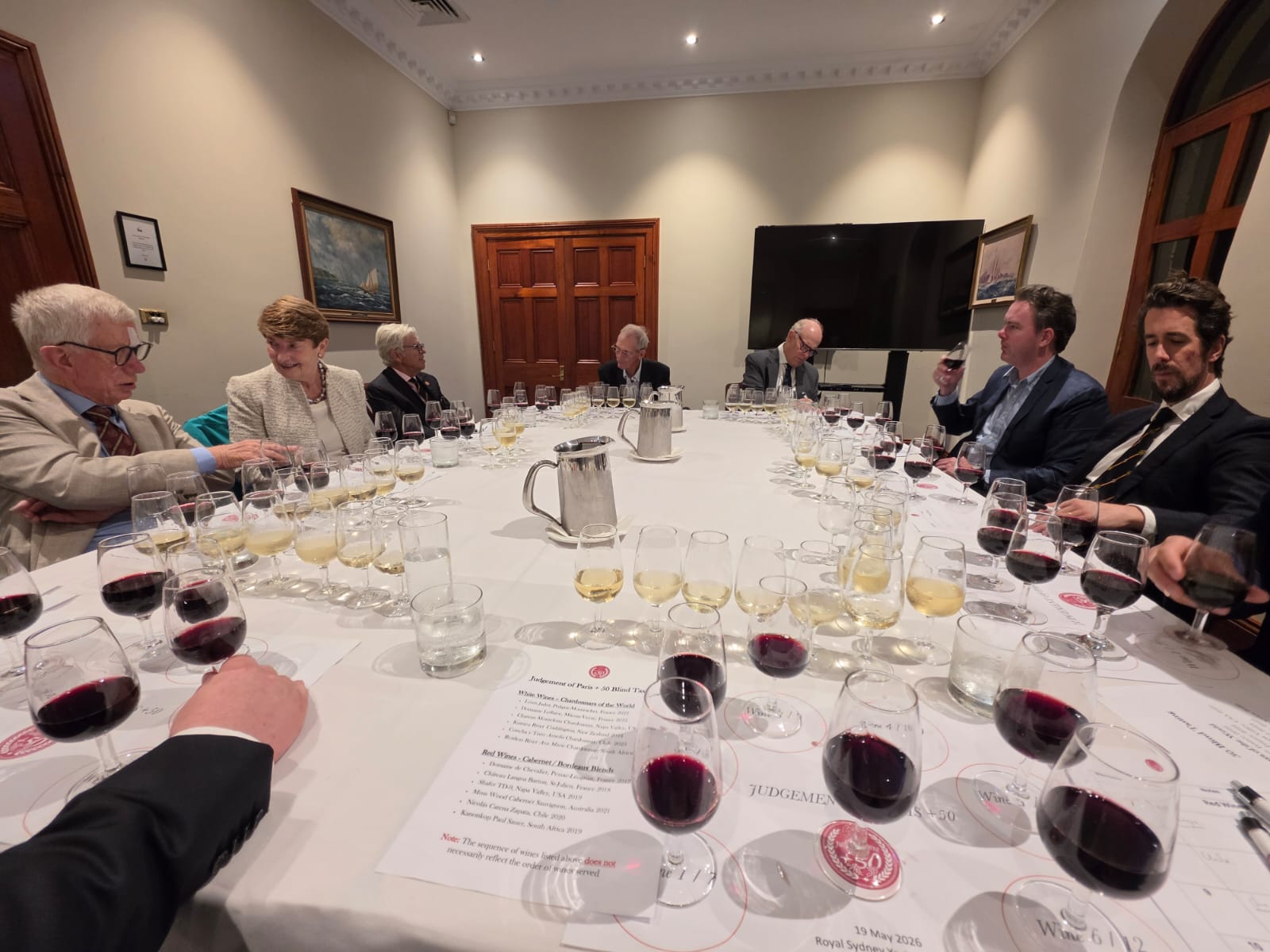
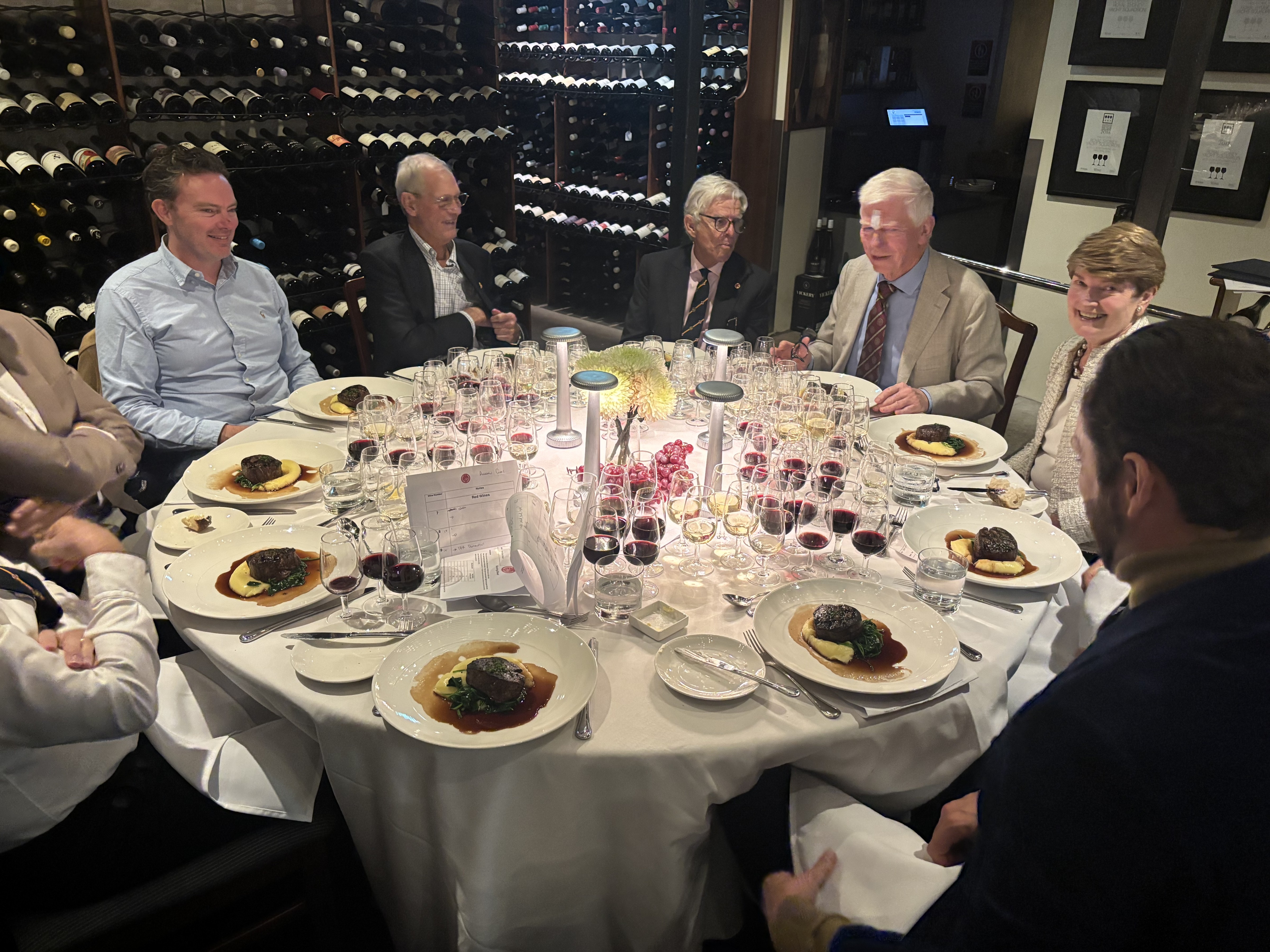
On 19 May 2026, the IWFS NSW Branch gathered at the Royal Sydney Yacht Squadron for Judgement +50, joining IWFS branches worldwide in commemorating the 50th anniversary of the original Judgement of Paris. Ten members attended, with Branch President Asa Joseph leading a blind tasting of six Chardonnays and six Cabernet‑based blends drawn from six countries — a line‑up designed not to recreate the original France‑versus‑USA contest, but to reflect the extraordinary global expansion of fine wine since 1976.
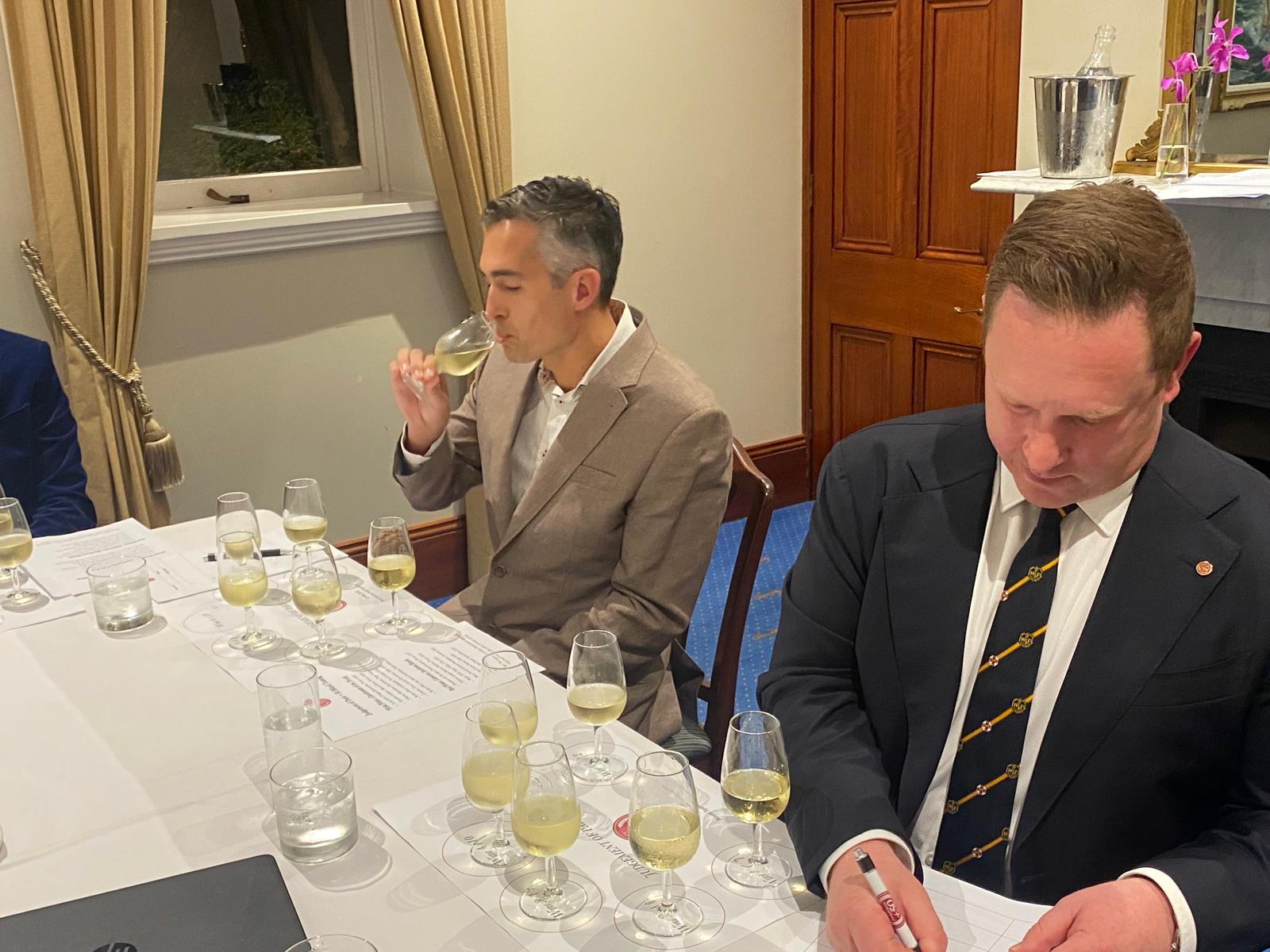
The tasting began in the Milson Room, where the atmosphere was lively from the outset. Conversation flowed easily, with confident early guesses, plenty of second‑guessing, and spirited debate as the wines unfolded. The quality of the line‑up was immediately apparent: polished, expressive, and stylistically diverse, with no weak wines in either flight. In the Chardonnay flight, the widespread use of oak — in markedly different ways across regions — blurred traditional stylistic markers and made regional identification especially challenging.
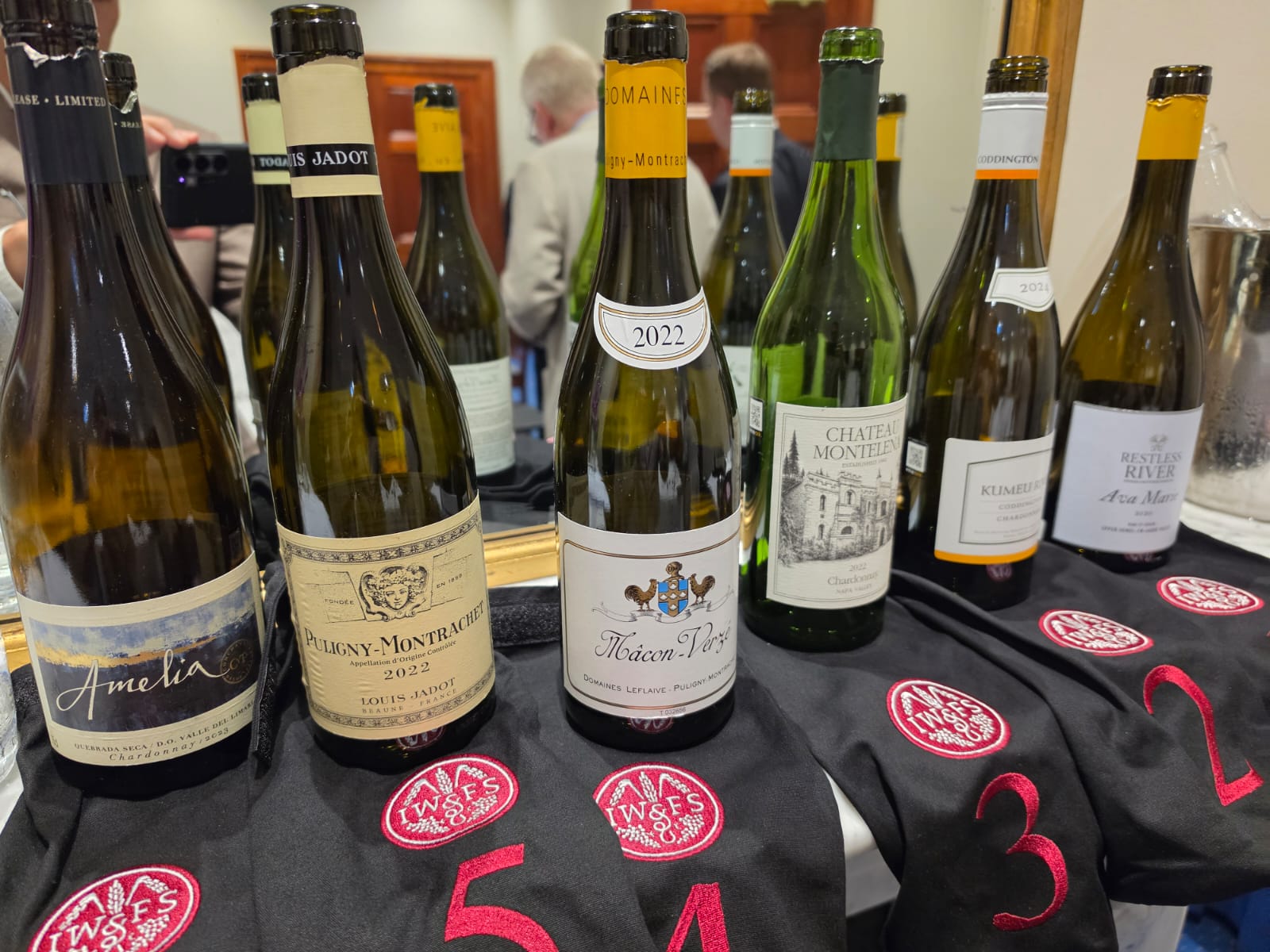
France ultimately topped the Chardonnays, with the Louis Jadot Puligny‑Montrachet 2023 taking first place. Second place was shared between two contrasting expressions of modern Chardonnay: Kumeu River Coddington 2024 from New Zealand and Domaine Leflaive Macon‑Verzé 2022 from France. Chile’s Amelia Chardonnay 2023 followed closely, while the Chateau Montelena 2022 — a symbolic nod to the Californian triumph of 1976 — sat mid‑pack. South Africa’s Restless River Ava Marie 2021 rounded out the flight, though still admired for its restraint and structure.
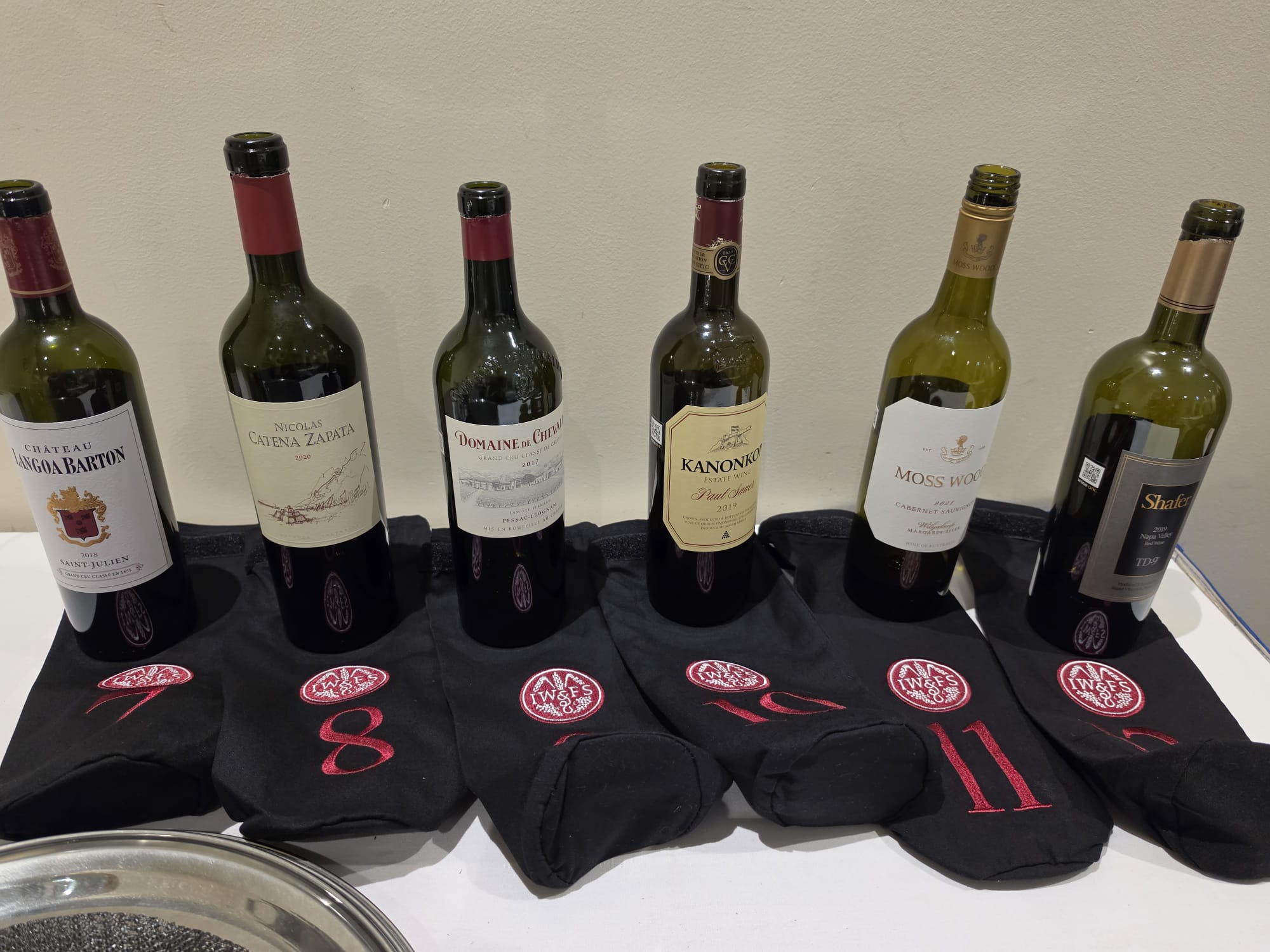
The Cabernet‑based blends generated even more discussion. Five of the six wines received at least one “favourite” score, underscoring the high calibre of the line‑up. The Shafer TD‑9 2019 from the USA emerged as the clear winner, followed by South Africa’s Kanonkop Paul Sauer 2019 and France’s Domaine de Chevalier 2017. Argentina’s Catena Zapata 2020 and Bordeaux’s Château Langoa Barton 2018 followed. The biggest surprise — especially for the NSW Branch — was the final placing of Moss Wood Cabernet Sauvignon 2021. Its more restrained, less fruit‑forward profile stood apart from the richer, more expressive styles in the flight, and this stylistic difference likely contributed to its position as the outlier. Even so, its placing was a moment of genuine shock for the room.
The results offered a fascinating counterpoint to the original Judgement of Paris. In 1976, the USA famously won both the Chardonnay and Cabernet flights. At Judgement +50, France reclaimed the Chardonnays, while the USA topped the Cabernets — a partial reversal that sparked much discussion over dinner. Despite the global diversity of the line‑up, the classic powerhouses still rose to the top, a reminder of the enduring influence of the Judgement of Paris on the world of fine wine.
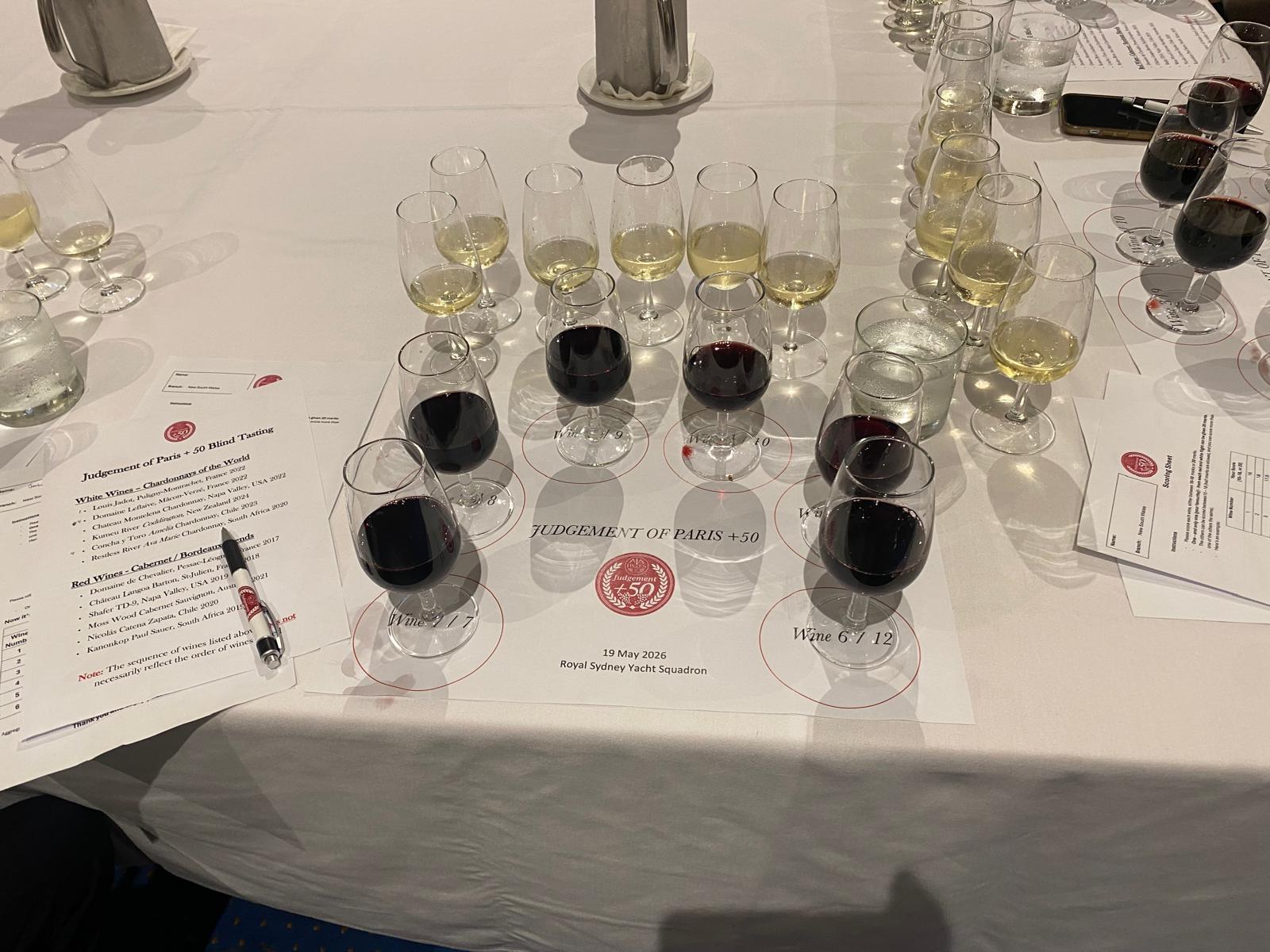
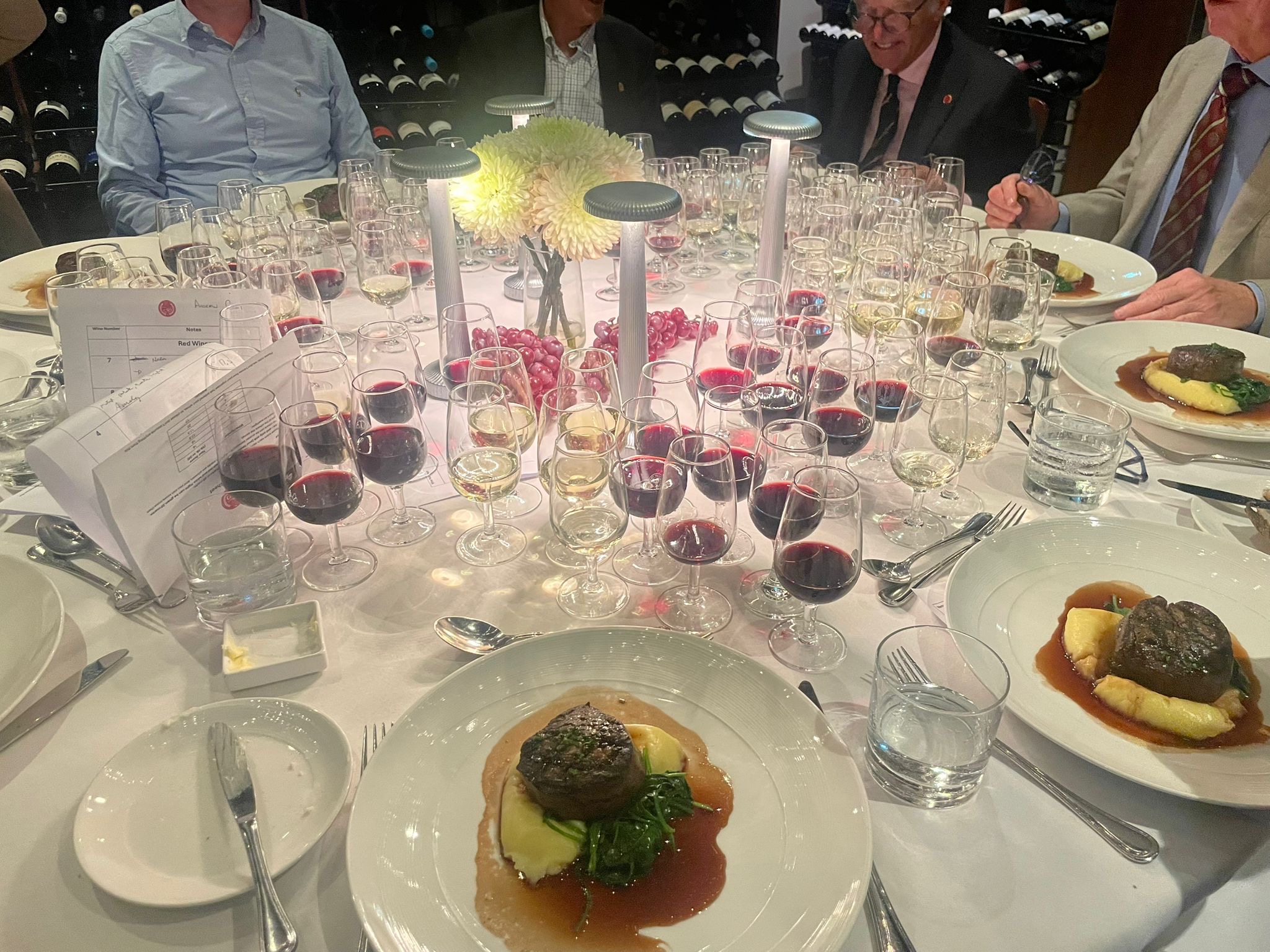
After the tasting, the excellent RSYS staff carried the wines downstairs to the Fort Denison Cellar, where dinner was served. The sight of all 120 tasting glasses laid out on the table was striking — a visual testament to the scale of the tasting and a moment that drew admiration and amusement in equal measure. Dinner was exceptional, and the remaining wines were enjoyed alongside lively conversation as members revisited their guesses, debated the results, and reflected on how far the wine world has come since 1976.
The IWFS NSW Judgement +50 tasting proved a fitting tribute to one of the most important events in modern wine history. The wines were outstanding, the company spirited, and the results both surprising and thought‑provoking. Above all, the evening captured the curiosity, discovery, and shared enjoyment that lie at the heart of the IWFS.
The Results
10 tasters scored the wines according to the following rules:
- Wines were scored between 15 and 18 points, with half marks allowed
- Each taster was allowed to assign one score per flight of 20 points for their favourite wine
The maximum a wine could theoretically score was therefore 200 points, if all 10 tasters nominated it as their favourite.
The international champion (across all global branches who participated in this event) is denoted in red text.
International Chardonnays
| Place | Wine | Score | Favourite Votes |
| 1 | Louis Jadot, Puligny Montrachet, Burgundy, France 2023 | 184.5 | 4 |
|
2= |
Kumeu River, Coddington, Aukland, New Zelanad 2024 | 178.5 |
1 |
| 2= | Domaine Leflaive, Macon Verze, Burgundy, France 2022 | 178.5 | 2 |
| 4 | Concha y Toro Amelia, Limari, Chile 2023 | 176.0 | 1 |
| 5 | Chateau Montelena, Napa Valley, USA 2022 | 174.0 | 2 |
| 6 | Restless River Ava Maria Chardonnay, Walker Bay, South Africa 2022 | 168.0 | 0 |
International Cabernet Blends
| Place | Wine | Score | Favourite Votes |
| 1 | Schafer Vineyards, TD-9, Napa Valley, USA 2019 | 184.5 | 4 |
| 2 | Kanonkop Paul Sauer, Stellenbosch, South Africa 2019 | 179.5 | 3 |
| 3 | Domaine de Chevalier, Pessac Leognan, Bordeaux, France 2017 | 177.0 | 1 |
| 4 | Nicolas Catena Zapata, Mendoza, Argentina 2020 | 175.5 | 1 |
| 5 | Chateau Langoa Barton, St Julien, Bordeaux, France 2018 | 172.5 | 1 |
| 6 | Moss Wood, Margeret River, Australia 2021 | 168.0 | 0 |
Event Photographs

The International Results
Judgement+50: the People's Verdict is in!
Fifty years ago, the “Judgement of Paris” – a blind tasting of wines in Paris organised by the British wine merchant Steven Spurrier on May 24th, 1976 - pitted top French wines from Burgundy and Bordeaux against Californian upstarts. Shockingly, the upstarts won, a result that catalysed change in the wine world. The event has been immortalised in books and a Hollywood film.
To celebrate the profound legacy of the original Judgement, The International Wine and Food Society (“IWFS”), the world’s largest gastronomic organisation, has been holding a series of events across the globe in what we believe is the largest coordinated blind tasting ever organised. Tastings are taking taken place in Europe, North America, South Africa, Asia and Australia, with approximately 1,000 IWFS members taking part. Bella Spurrier – wife of the late Steven Spurrier – participated in the flagship London event.
In eight locations in the UK, Australia and South Africa, 221 members tasted and scored on a 20-point scale the same flights of wines - a world-class line-up of 6 Chardonnay wines and 6 Bordeaux (red) blends, selected by members of the Society’s International Wines Committee. Two bottles of each flight were from France, and one from Napa Valley, South Africa, Australia, New Zealand, Chile or Argentina. The scores have been aggregated.
The verdict is now in:
| Best Chardonnay: | Kumeu River, Coddington, New Zealand 2024 |
| Best Bordeaux Blend: | Shafer Vineyards TD6, Napa Valley, USA 2019 |
| Top Four Wines (1st and 2nd from each flight): | One each from New Zealand, Napa Valley (USA), South Africa and Chile |
| Top French Wine: | The Louis Jadot Puligny Montrachet placed in a virtual tie for 3rd place amongst the whites, but received the 2nd most number of ‘favourite’ votes, after the Kumeu River |
The scores for each category were extremely close, with just 0.8 points (out of 20) separating the 6 red wines and only 0.6 points for the whites.
What it means
Stephen Harrison, Chair of IWFS Europe Africa told us: “With its world-wide membership of enthusiasts and experts, only an organisation like IWFS could attempt an event on this scale. Rather than seeking to copy what was done 50 years ago, we wanted to celebrate how much the world of wine has changed in half a century. World-class wine is now being produced across the Globe. Congratulations to Kumeu River and Shafer for scoring the highest point totals!
However, with such a narrow range of scores across the board, the IWFS verdict shows that we live in a golden age for wine lovers - we now have a glorious diversity of great wines, winemaking techniques and producers to choose from.
We were lucky to be able to draw on our deep resource of experts to select the wines. We tried to choose bottles that exemplified the characteristics of their regions, was widely distributed, and at a similar price point. As a Society, we balance accessibility and aspiration, and therefore sourced the wines at a cost that enabled so many members to take part.”