The Joy Of Port, Especially Vintage Port (With Tasting Notes)
I previously looked at a range of wonderful champagnes enjoyed thanks to the generosity of friends – a joyful occasion and a great opportunity to look at such amazing wines. Given that a group of friends recently convened to enjoy a range of great Vintage Ports, it struck me that a look at the joy of Port was warranted.
A few points first.
Port comes in a multitude of styles. At its most basic, Port is simply wine that has been fortified. Once the perfect moment is achieved (twenty percent by volume), brandy is added, which takes the alcohol to around eighteen to twenty percent. As one might expect, the cheaper Ports do not have the best quality brandy, which can be intrusive. The better the base wine and the higher the quality of the brandy, the better the Port.
Fortifying the wine has the dual effect of increasing its capacity for aging well and stabilizing it (indeed, originally, it was done specifically because fortification increased the chances that the wine would survive the long journey from Portugal or Spain to the United Kingdom). The final wine would be sweeter, richer, and more alcoholic than if fermentation had concluded naturally.
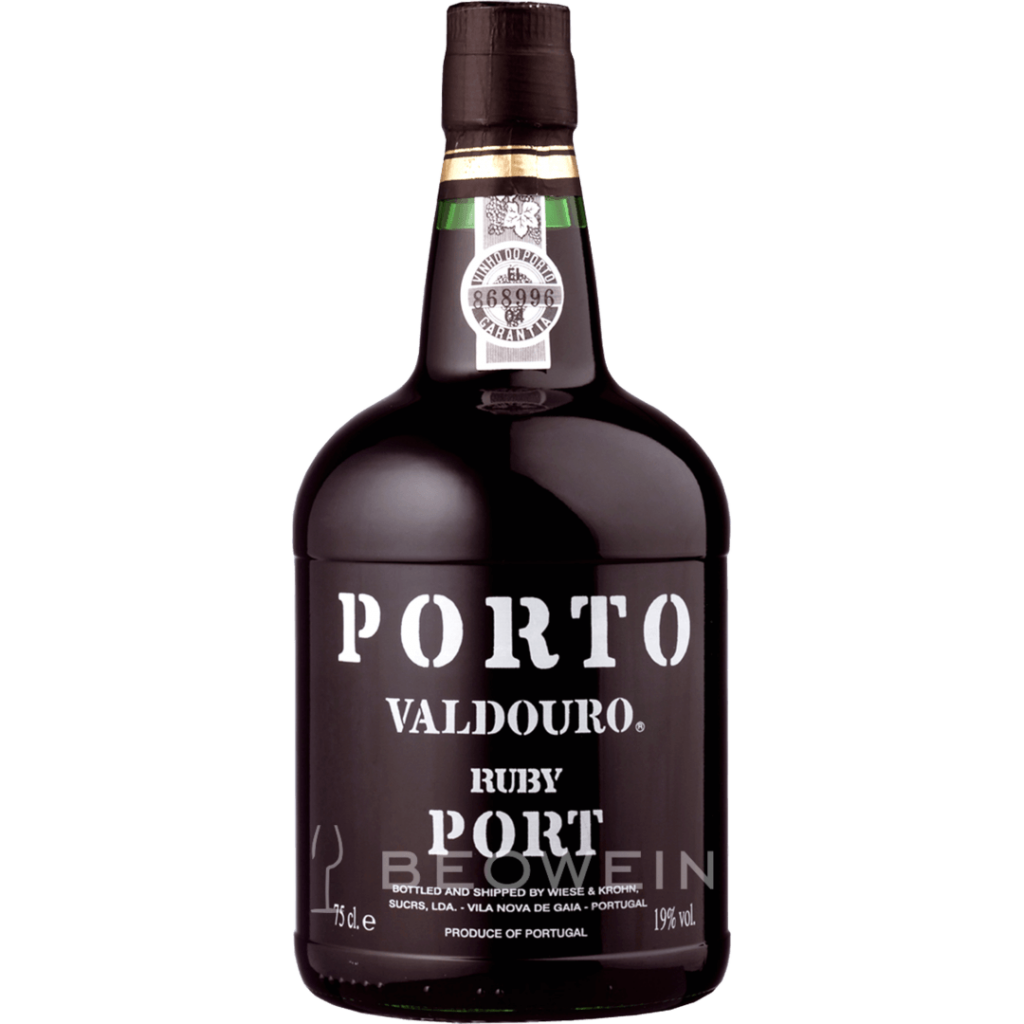
Image 01 – Porto Valdouro Ruby Port
Relatively affordable young Ruby Port by Porto Valdouro
There is, of course, a wide array. The simplest style is Ruby : the fermented wine, which can be from a range of vintages, is aged in a variety of large format containers (barrels, wood, cement, stainless steel, etc.) and then bottled. It is, above all, the Grapey One.
It is another style that is ideally served chilled – this often shocks some drinkers, who mistakenly see all wines in this style as heavy, sweet wines to end the night.
If any category can be defined as cheap and cheerful, this is it – the serious stuff is often very affordable. There are, though, some wines which are a step up, known as Reserve Rubies .
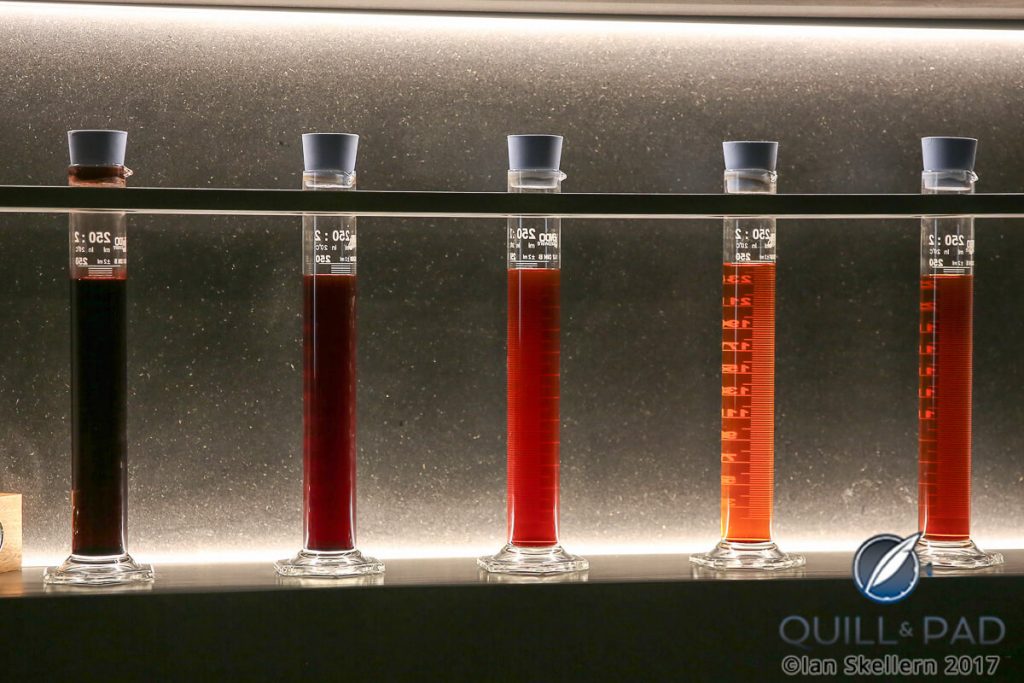
Image 02: Port-color-9337-1024x683.jpg
We then move to one of the world’s great wines, Tawny Port . The idea here is that the wine – or at least a proportion – will have spent a time in barrels (or again, some other format in use these days) and hence will lose its deep color and become more “tawny” in hue.
After the length of time designated by the producer, they will blend in wine from several vintages and bottle as a “Ten Year Old” Tawny Port or “Twenty Year Old,” etc., depending on the age/dates of the wines in the blend.
Some may be relatively youthful; others venerable, even ancient. Some will be non-age statement Tawnies and others will be entitled to use one of the approved designations, which must mirror the actual average – or be close – age of the Tawny. That is, at least for those Tawnies where their age is mentioned – say, “20 Years,” even up to “40 Years.”
Tawnies will have spent a lengthy stay in barrel, whereas Rubies are aged in wood for very little time, if at all. Barrels may be anywhere from a few years to decades. Most producers have separate ranges of Tawny Ports in their portfolios, from 10 or thereabouts, maybe 15, up to 40 years of age or higher. 40 Years is often the top range but sometimes there are special releases.
You need not absorb all the information here to select a good example. Buy one of the top producers in a 10 or 20 year Tawny and it will be the perfect introduction.
Naturally, there is also a range of prices, but even the top examples, those arguably amongst the greatest of all wines, are not prohibitively expensive.
They will vary, of course, but expect a lovely rancio note, nutty characters, honeycomb, lovely lusciousness, gentle sweetness, balance and great length from the best examples.
For me, Tawnies are the best place to start if Port is new to you and you are not sure you want to go the full distance (again, amazed at how affordable some of the great ones are). In my opinion, this is the most underrated of all styles at the top level, or at least alongside our highest quality Rieslings.
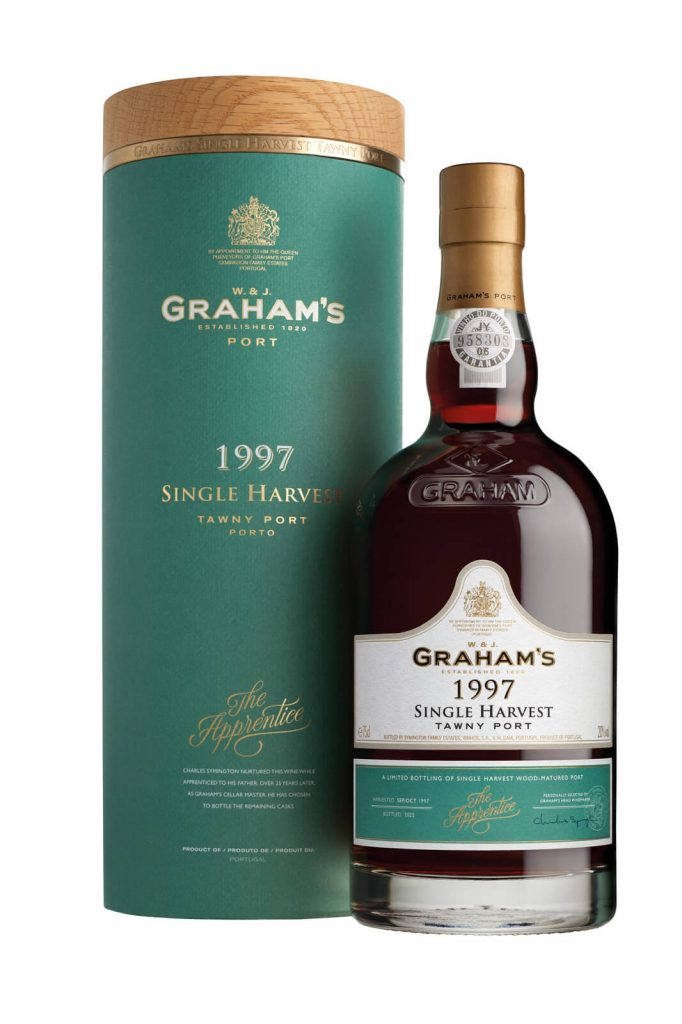
Image 03: Grahams_1997_Single_Harvest_Tawny_75cl_With_Tube-682x1024.jpg
Tawnies can also be released as a single vintage, Single Harvest Tawny . The first wines here will be labeled “Colheita” (pronounced col-ate-a, apparently the Portuguese word for “harvest”). These wines will have spent at least seven years in barrel though usually in practice much longer, often a couple of decades – some may be decades in wood.
The best are some of the greatest wines made in Portugal. Many of the Houses have ranges of Tawnies and then separate ranges of Single Harvest Tawnies.
There is also some categories which are not thick on the ground, such as Crusted Ports which, sadly, are not as common as they once were. There are also – and talk about rare as unicorns – small quantities of a style known as Garrafeira .
We looked at these when we considered the 2016 Vintage Ports .
As a brief generalization, Tawny Ports are aged in barrel, or wood, while the most expensive of all Ports, Vintage Ports , are aged in bottle. Between the aged Tawnies and the Vintage Ports are a couple of categories, Single Quinta and Late Bottled Vintage (LBV), which do some time in barrel and some in bottle.
There is also some White Port. Some examples can be high-quality wines, others more commercial. At its best, White Port can be a lovely if not especially serious drink – ideal during the warmer months, served chilled, on the rocks, in spritzes, cocktails, and so forth. Non-vintage White Port is not as complex as the main styles of Tawny Port, though can still be very enjoyable. It is often seen as the ideal introduction to Port.
It is usually made from a combination of varieties such as Gouveio, Malvasia Fina, Moscatel Galego, Rabigato, and Viosinho. The fruit is often co-fermented to produce a base wine with very fruity flavor. These days, there is some experimentation with age-designated White Tawnies.
The producers also do a selection of “books” and “collections,” usually from top Tawnies, especially older vintages.
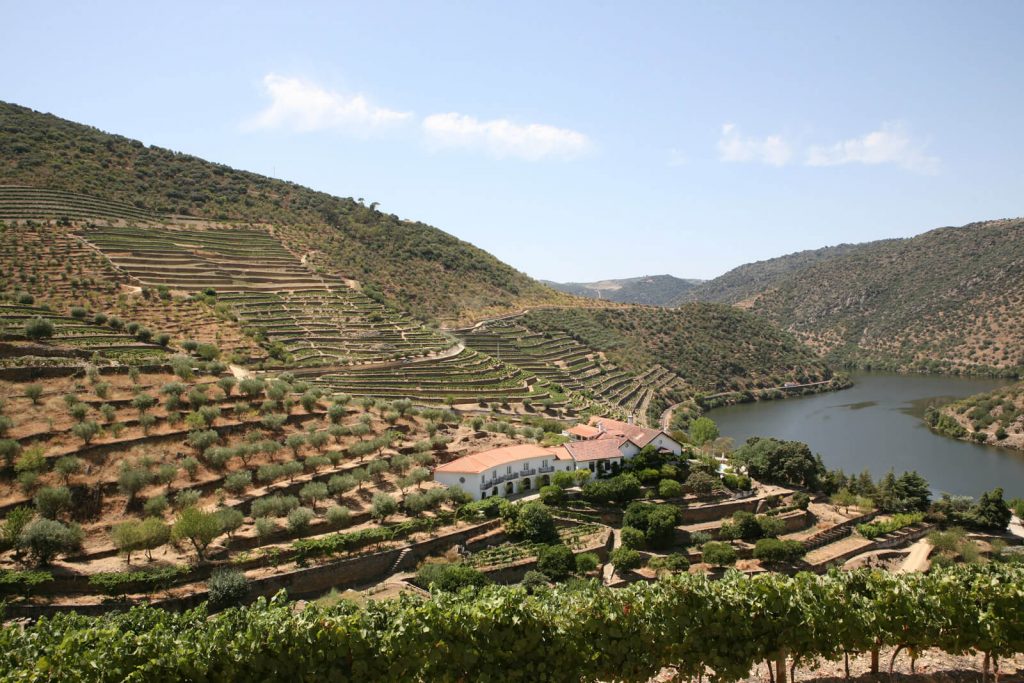
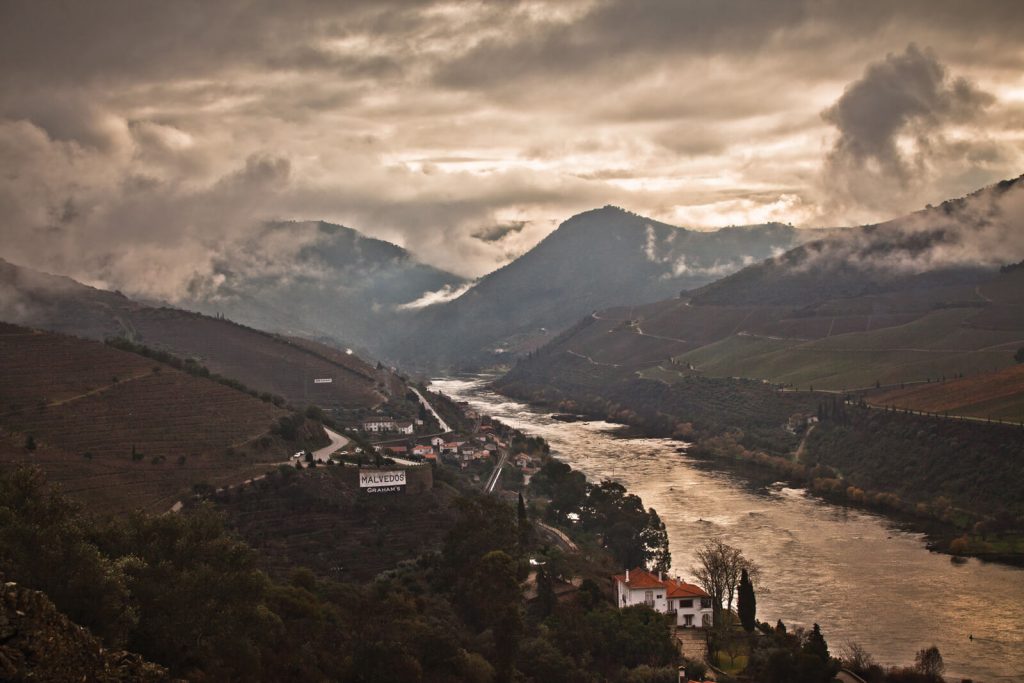
It is worth remembering that all Port derives from what has been described as one of the world’s greatest wine regions, a UNESCO World Heritage site, Portugal’s Douro Valley . Home to some of the oldest vineyards in the world with breathtaking steep, terraced vineyards on both sides of the river that snakes its way through the region, and a region that is home to a large number of local grape varieties.
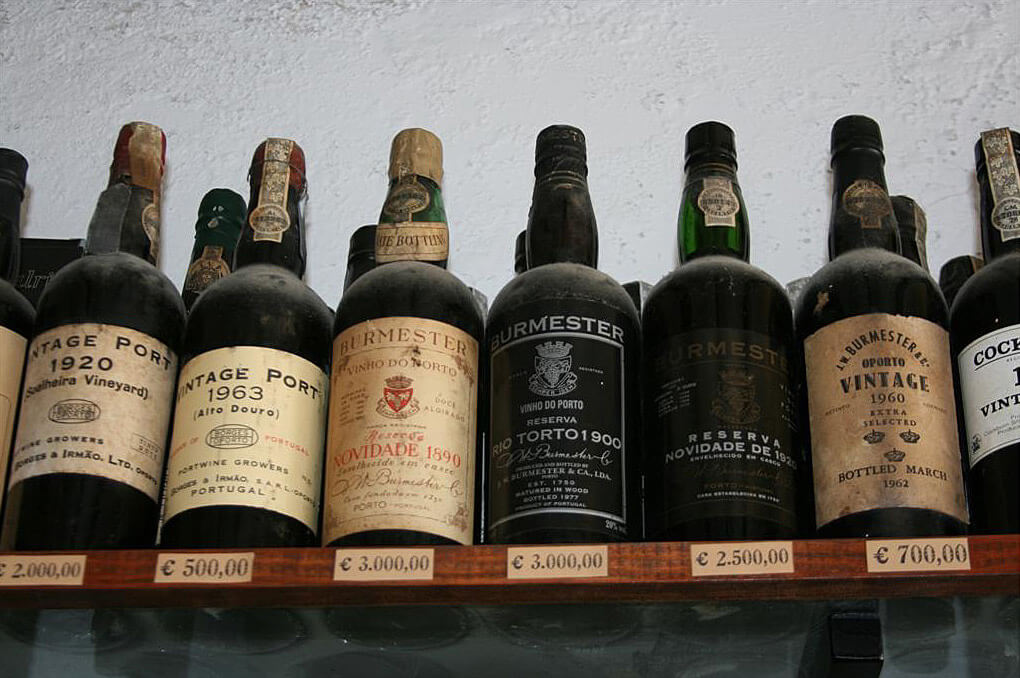
Image 04: Old_Vintage_Ports.jpg
Vintage Port
Vintage Port is released in vintages, usually just a few times per decade, though most see more than that. The producer then makes what is known as a declaration. This is a commitment that the year is of such quality they will release a Vintage Port – a powerhouse wine that can improve for decades and often decades more. In effect, the best of the best.
It is worth mentioning a few comments I have noted down about Vintage Ports from various sources (I regret I have not noted the original source for all).
“No other wine type improves by as much as Vintage Port.”
“Vintage Port is the most concentrated wine type of them all.”
“Vintage Port at its best is unbeatable.”
“Vintage Port is arguably the greatest of all wine styles, and one of the potentially longest lived with examples dating from the 18th century and earlier”
Hard to argue with any of that. Vintage Ports travel to the event via tanker, separate to the wine which will be used for Tawnies, Rubies, and other styles, and then spend a short time in barrel – usually between 18 months and two and a half years – before being bottled. Higher quality wines for the top Ports are foot-trodden in traditional European concrete vats, although these are slowly being replaced by presses that are more technologically advanced and – some would argue – equally efficient. However, many would say nothing beats the traditional method when it comes to extracting color, flavor, and tannin.
After that, it is time and patience. I recall when tasting the 2016 Vintage Ports for Quill & Pad that a number of the producers advised that they never release Vintage Ports under the age of 20 years.
Take, for example, a recent release like the 2016 or 2017. Wines only seven to eight years of age can already be magnificent, but if you want them at peak, in every sense, then you will need to give them time. Thirty years before they start to hit their straps is not exaggerated, though some will drink them a little younger than that. They can easily last half a century and more.
Made predominantly from Touriga Nacional, Touriga Francesa, Tinta Roriz and Tinto Cão, amongst other varieties, these are some of the richest, most flavor-intensive wines known. Vintage Ports, both straight and Single Quinta, can be incredibly complex.
They’re generally expensive, but very few wines of comparable quality can be found at similar prices.
Vintage Port tasting notes
So, to a day of tasting a fine selection of Ports. Seated at one end of a long dining room table with a view straight out over the ocean, life did not seem too bad at that moment.
I won’t include every wine we looked at but it was a very representative selection of styles and vintages from recent decades. Flights rather than an overview tasted everything blind, though we did learn what had been included in the overall tasting.
A number of them are no longer in the flush of youth. There will be some buyers lucky enough to find well-cellared bottles in the market somewhere but, in many cases, I suspect these more mature wines will come down to how well you can negotiate with friends, acquaintances, and the odds and sods of posts still collecting dust in the back of wine cabinets and cellars.
That is not to say that none of these wines are still available. There are some stunning 20 and 30 year old Vintage Ports on the market, and I do not mean just those more recent vintages.
That said, do not assume Vintage Port needs to be old. It does not, as one seasoned Aussie taster, John Avery MW, a noted Port importer, observed: “Port should be drunk from cradle to grave.”
I can’t take credit for that wonderful line. I first saw it in one of my favourite wine books, Port Vintages , by Jancis Robinson and Richard Mayson (a book I would highly recommend to anyone interested in Port).
Time in the cellar gives these wines layers of complexity but Vintage Port is certainly not unworthy in its youth. It is just that many people think experimental dentistry is preferable to subjecting their teeth to the sweet wines, a fear only intensified when they see ripe Vintage Port.
Fine ancient Port, involving the best old Rieslings (should you go down that path), are physical risks, but well worth it. My dentist once assured me that it is the acid, not the sugar, that is guilty there so drink up those sweet wines.
Our tasting took place at a friend’s house overlooking the ocean on Queensland’s Sunshine Coast – a day that has been marked in perpetuity as the Sun of Gad!
Around 12 of us gathered for this wine orgy – all very responsible, as most of the group walked the few kilometres back to my home with only a single casualty, one friend face-planting in the sand on Mooloolaba’s main beach after deciding to roll down a sandhill that he had previously, far more sensibly, walked down.
The wines were from Taylor’s, Graham’s, Sandeman, Quinta do Noval and Dow’s, including their famous Quintas.
The first flight was:
1990 Graham’s Quinta dos Malvedos
1995 Taylor’s Quinta de Vargellas
1996 Graham’s Quinta dos Malvedos
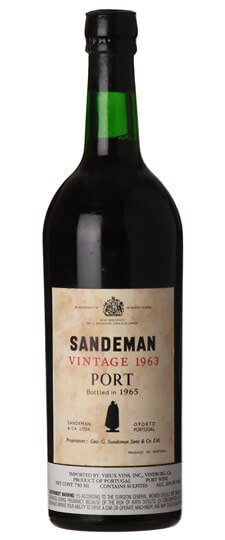
1963 Sandeman
Image 05: Taylors-port-Quinta-de-Vargellas-2-1024x683.jpg
First up, the only wine of the day under a different label.
1990 Graham’s Quinta dos Malvedos –
Dry red girders and cough syrup, skins and plums with a very firm tannic backbone when first poured. It opened up nicely, and the tannins eventually folded into the wine, though it is still firm. Very deep maroon color and certainly not showing as the oldest of this group. Not as sweet as the Best of the Rhodes maybe. There are now cocoa powder notes, roasted meats, cigar accessories, old leather, black cherries, aniseed and fruitcake. Fine focus here and good complexity. Really impressive wine. Good balance and very good length. 94.
1995 Taylor’s Quinta de Vargellas –
Immediately, this is darker with more mahogany tones, almost blood red in color. The nose is more immediately appealing, immaculate balance. Very lifted aromatics. This is even more complex, though both wines have much to offer. Red fruits dominate – spiced raspberries – with an attractive creamy texture. Very silky tannins with excellent length. It is quite mature and certainly ready to drink now. Orange rind notes. Fresh, bright, and seamless. 97. (as a post script, when the wines were revealed, there was some discussion about whether this should be promoted to the winning position, given its sheer drinkability and completeness. It certainly could be considered, but I was happy with our original allocation).
Image 06: Grahams_Port_Quinta_dos_Malvedos_JPM_Dec-1024x683.jpg
1996 Graham’s Quinta dos Malvedos –
Similar colors to the older wine, perhaps a touch lighter. Slightly more sweetness and violets. More obviously plum and black fruits. Softer tannins, slightly shorter and less complex. Remnants of the cough syrup here too, as well as notes of leather and cigar boxes with hints of coffee beans. Very fine wine and thoroughly enjoyable. 95. This was tough but the group resolved that, while all three wines were excellent, the Taylor’s just shaded the others.
1963 Sandeman –
My only wine for the day (well, technically, I contributed two, but the second was a bonus). This is quite a venerable old Port, and it seems too many samples have seen better days. In the past, it has been a favorite of ours but I must confess, I was not confident. As my co-conspirators left their houses with three bottles of wine to play with, with a wide range of options, I left home with a solitary bottle. I was worried that it would be seriously outgunned.
Our bottle was in excellent condition, and it showed extremely well. The color was obviously much older, with real browning and tidelines, and the nose was perhaps a little volatile, but it also had the complexity that only time, age, and experience can provide. Dried fruits and raisins, orange rind, old leather, coffee beans, mushrooms, plums and chocolate. Good focus, excellent length and a gentle finish. Very good balance as well. Fine wine, still has time ahead, and this would be glorious with a plate of fine cheese. 96.
Image 07: Grahams_Port_Quinta_dos_Malvedos_JPM_Dec.jpg
Final rankings, for those interested in such things, were a victory to the 1996 Graham’s, from the 1995 Taylor’s which narrowly edged the 1963 Sandeman and then the 1990 Graham’s.
In terms of my scoring, Taylor’s snuck ahead of its rivals but there was hardly anything in it.
The second flight:
1963 Sandeman (different bottle)
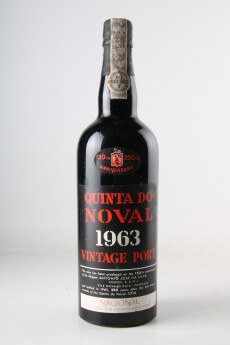
1963 Quinta do Noval Nacional
1970 Graham’s
1977 Dow’s (magnum)
Image 08: Sandemans-port-1963.jpg
1963 Sandeman (different bottle) –
The big difference here is that our first bottle was under natural cork while this one was under ProCork. Now, I have never subscribed to this extremely misguided experiment (of thirteen bottles of rather pedestrian claret that were bottled with some under natural cork and some under ProCork, ten were faulty and even more eccentric) and the experiment meant nothing as far as I have been concerned.
Of course, this is an equal disaster for ProCork (as a cork), but it is the wine that suffers. If the same had been done and ten under natural cork and three under ProCork, then the results still would have meant nothing. For this to have the effect they want, all wines bottled under natural corks would have needed to be re-corked with ProCork and then monitored. Instead, what we had was a typical marketing grab.
Anyway, back to the Port. This was in good condition. For me, this was probably just ahead of the first bottle, though that was a fine effort. Even more complexity, and the palate had more intensity and better length. Still has a future, but it is not likely to see it again. A beautiful mature Port. 97.
Image 09: Sandemans-port-1963-1.jpg
Image 10: quinta-do-noval-nacional-1963.jpg
1963 Quinta do Noval Nacional –
Darker in color with more life, the 1963 Nacional began showing spirits but improved considerably and is still very fresh. There were notes of blueberries, incense, aniseed, coffee beans, ribbons of black fruits, fig jam and Cocoa Puffs. Very concentrated, if perhaps a fraction disjointed. Impressive, dense wine that carried great length and still retains plenty of life. 98.
1970 Graham’s –
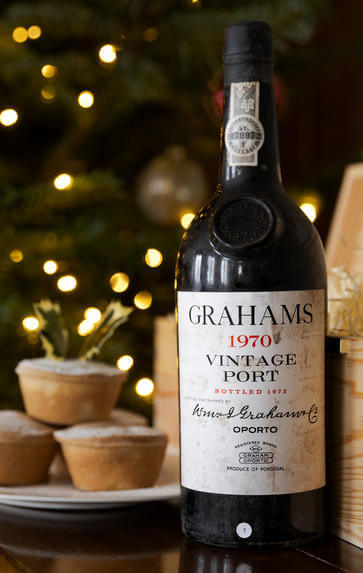
Another wonderful Port – plums, chocolate, coffee beans and Black Forest cake notes. Opulent, creamy texture, seamless with all the plushness in the world. Coal dust, dark chocolate, leather, spices and more. Immaculate balance here with very good length. Fruitcake, licorice, more plums. Like drinking liquid fruitcake, but in a very good way. This is right in the groove and another that is in the consideration for the wine of the day. 98.
1977 Dow’s (magnum) –
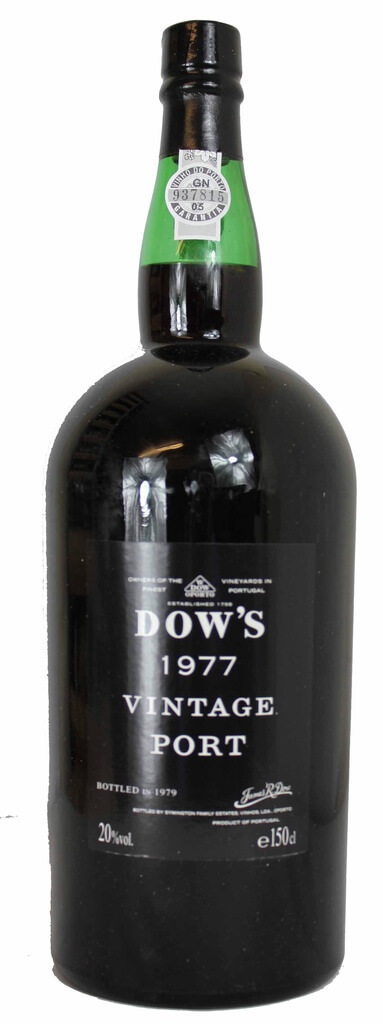
For me, this was probably the star of the day. Just glorious Port. There were razor sharp spices, red fruits, exotic characters, hints of bergamot, blueberries, and currants, chocolate, old leather, dark berries, and wild strawberries. Immensely complex and still got plenty to offer. Fabulously finely balanced, concentrated, and powerful. Immense length and so much finesse. A great wine. Certainly one of the best Ports I have ever had the privilege to drink. 99.
I was outvoted on the best wine, which I’ll come to, but for me this was it.
Final rankings for the flight:
1977 Dow’s magnum
1963 Quinta do Noval Nacional
1970 Graham’s
1963 Sandeman
For the final flight, we really restricted our options:
1970 Graham’s
1977 Dow’s (magnum)
1977 Dow’s (magnum bonus bottle, which is the same wine as the previous 1977 though had apparently travelled a different path).
I understood that, against my wishes, there were some irrelevant dry reds and other things included, but these were quickly dismissed or finished with dinner.
1970 Graham’s (second bottle) –
The color is looking a fraction more aged now and this is certainly a slightly more mature wine. That said, it is still in very good condition. Cumquats, dark chocolate, ironstone, plums, mint and mocha. Florals and more chocolate on the palate, it has slightly more tang to it through acidity and less opulence, and the tannins are slightly more prominent, but it is still a very fine wine. The first 1970 just shaded this bottle for me, and the marginal difference was that I scored this a point lower. 97.
1977 Dow’s (magnum) –
This is clearly a bottle that has experienced a slightly different journey. A wonderful old wine, but not the equal of the previous 1977. The color is slightly older and the nose has more propagation for cooking. Spices, dark fruits, leather, chocolate and more. It is still stunning, has lovely sweetness and bright notes on the palate with coffee bean flavors. The palate is certainly not the equal of the first 1977 and it is just a little shorter on the finish. A glorious wine but falls just a little behind the earlier one. 97.
1977 Dow’s (magnum) bonus –
This is a serious contender. If the first 1977 was the ideal, then this is very close. Sweet chocolate flavors dominate, but are well balanced and well supported by supple tannins and fresh acidity. Coffee beans, vanilla, chocolate, plums, leather, and serious length. Structure and length, it ticks all the boxes. Glorious. 98.
Somewhat amusiginly, this flight ended in a dead heat.
So, overall results….
Putting aside everyone else in the crowd for a moment, the opinions of the two driving this extravaganza – not me but my good friends, John and Tom – they decided that, for them, the wine of the night was the 1963 Quinta do Noval Nacional, with the 1977 Dow’s just in its shadow.
For me, those positions were reversed, while the 1970 Graham’s, which was not too far behind them, deserves great accolades as well.
Further reading
Anyone interested in learning more about the world of Port should acquire a copy of Port Vintages – The Chronicle of Vintage Ports, from the beginning by Jancis Robinson and Richard Mayson or Port and the Douro by Richard Mayson.
Indeed, anything by Richard Mayson on Port and the Douro is well worth tracking down.
And if you have not yet been to Porto and the Douro, it should absolutely be on your bucket list.
Image Gallery
Tap any image to view larger. Image numbers match the references in the article above.