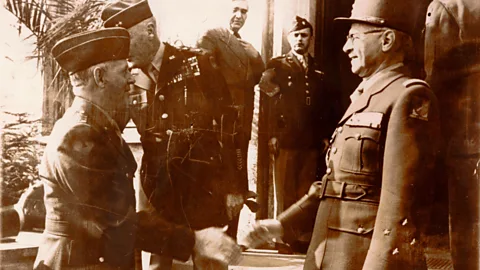
In honour of D-Day. Our love of wine and to the 359 Canadian soldiers that died on D-day a tribute to their sacrifice so that we can still quaff the love of France.
By Emily Monaco
From hiding their best bottles to providing secret intel to Allied forces, French winemakers played an essential role in the French Resistance, which helped pave the way to D-Day.
While Adolf Hitler wasn’t a wine drinker, his top guns definitely were. In a July 1943 press conference in Germany, airforce commander-in-chief Hermann Göring extolled his country’s growing nationwide cellar of French wine. In addition to stockpiled personal drinks for Bavaria’s hungry and Champagne-imbibing Field Marshal Erich von Manstein, “such a vast quantity of both French and foreign wines had been stocked,” said Göring, “that there were sufficient reserves for the whole front and the whole of Germany and, in addition, enormous stores of wine.”
Before World War Two broke out, France produced 79 million hectolitres of wine per year, making the country the world’s biggest wine producer, according to Kym Anderson, a wine economist at the University of Adelaide, and Professor Vicente Pinilla of the University of Zaragoza. Despite shortages and rationing throughout Europe, people were still able to find wine to drink during the war. But while France’s wine cellars bore the brunt of the Nazi regime’s plundering of European wine production, French winemakers played a pivotal role in supporting the Resistance and, by extension, Allied forces. On D-Day, June 6 1944, France’s wine was not just a symbol of resilience, but also a weapon in the fight for freedom – and those who produced it did their part in turning the tide of war and reshaping the course of history, even if their contributions have largely gone untold.
In June 1940, following Nazi victory in the Battle of France, the Germans divided the nation into zones, including a Nazi-occupied north and an unoccupied south governed from Vichy. To the north, important French wine regions like Burgundy, Bordeaux and Champagne fell under direct Nazi control; to the south, safe zones of smaller winemaking regions operated with varying degrees of autonomy, bound both by the weight of the Nazis and the Vichy government. Since wine played a central role in the French identity, Nazi policies concerning French wine created a nuanced, yet clearly exploitative Venn diagram of the interests of Hitler’s Germany and those of the Apartheid-like Vichy government.
“If you look at the demarcation line between the occupied zone and the free zone, it’s interesting to see that it’s not a straight line cutting France in half from Nantes to Strasbourg,” Antoine Dreyfus, author of the book Les Raisins du Reich (The Grapes of the Reich), told La Nouvelle République. “It includes Bordeaux and Cognac.”
At the outset of the war, much of France’s wine was simply looted by the Nazis (to the tune of two million bottles in Champagne in the first weeks of occupation alone). But soon, a system was in place to ensure at least the semblance of a free market. Nazi-appointed special wine agents, dubbed Weinführers (wine leaders) by the French, were sent to each of the major wine regions, tasked with sourcing the best French wine and sending it back to Germany. As a result, by 1945, tens of millions of hectolitres had been forcibly purchased at below-market rates or stolen outright by the Nazis, with the very best sold to German and Axis elites. “Everyday wines”, according to Lucand, were “sourced in very great volumes to respond to the German war effort, [to] feed the civilian population and troops in combat or transformed into fuel alcohol.”
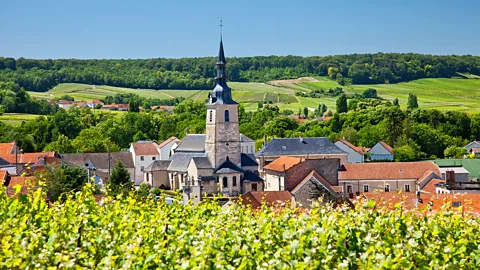
According to Brigitte Batonnet of the Comité Interprofessionnel du vin de Champagne, which represents Champagne wine growers and producers, Nazi policies devastated the industry. “We could only sell to Germany and to Axis countries at prices fixed by the Germans,” she said. Wartime shortages and a devastatingly poor 1940 harvest made orders of up to half a million bottles per week nearly impossible to fill, as Don and Petie Kladstrup recount in their book, Wine & War: The French, The Nazis & The Battle for France’s Greatest Treasure.
As a result, Champagne’s Wienführer, Otto Klaebisch, demanded Champagne producers make up the difference from their reserves. A subsequent lack of Champagne in the international market led to a surge in facsimiles, according to Batonnet. “Production of American sparkling [wine] quadrupled during the war,” she said. “They put Champagne on the labels; that’s still a problem today.” This lingering WW2-era issue is clear to anyone visiting the Museum of Champagne wine and regional archaeology in Epernay, where bottles illegally sporting the region’s name are on display.
But while Nazi policies proved disastrous for French wine production, many local winemakers complied – at least at first. “The majority of wine professionals were looking to survive, selling to the highest bidder,” said Lucand. “Others, [which were] rare until 1944, resisted.”
By 1942, a shortage of men, animals and materials caused wine production in France to plummet from 69,015,071 hectolitres in 1939 to just 35,022,362. And while many in France’s winegrowing regions had initially been sympathetic to the Vichy government, attitudes began to shift in the latter half of the occupation. New Vichy policies forbade the advertising of alcohol, levied heavy taxes and imposed France’s first minimum drinking age of 14. Reactions ranged from “suspicion to frank hostility“, and the imposition of forced work placements in 1943 pushed even more to the brink.
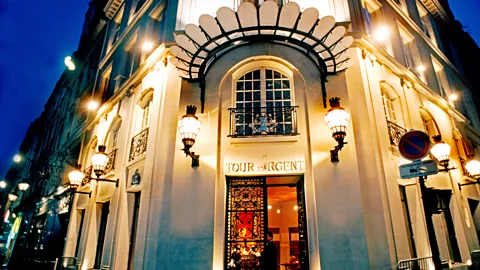
Small acts of resistance had surfaced in the French wine world from the outset of occupation, with everyone from the owner of Paris’ acclaimed La Tour d’Argent restaurant to the de Nonancourt family of Champagne’s Laurent-Perrier wine label hiding their best vintages from the Nazis, often behind hastily built walls in their cellars.
In the Kladstrups’ book, Robert Drouhin of Burgundy recalled being tasked, at just eight years old, with seeking out spiders to place before a newly built wall, in hopes that their webs would disguise it and thus keep the best of his father’s Romanée-Conti (one the world’s most famous and expensive wines) out of Nazi hands. Many others took advantage of German orders to offload their worst vintages, hoping – in many cases correctly – that the Nazis would be none the wiser when they received cases of swill.
In some cases, French winemakers had help from the other side. The Weinführers were industry veterans hand-selected for their wine expertise. As such, they often harboured more sympathy for their fellow wine professionals than for the Reich. The Kladstrups write that Burgundy’s Weinführer, Adolph Segnitz, turned a blind eye to winemakers hiding their best bottles; and in Bordeaux, Weinführer Heinz Bömers’ particular hatred for Göring led him to fill Göring’s order for several cases of Château Mouton Rothschild with wilfully mislabelled ordinary wine.
In addition to these small acts of resistance, a larger French Resistance was brewing. This underground network included communists, Gaullists loyal to Charles de Gaulle (who led Free France from exile in London) and the Maquis – a guerrilla group formed by those fleeing forced conscription into Vichy France’s compulsory work service. The disparate underground groups became a more cohesive network as the war marched on, with many banding together under the command of General de Gaulle by 1943. By gaining access to sensitive information, attacking the rail system to handicap German transport and supply lines and accessing and providing illegal weapons to fellow Resistance members and leaders, the French Resistance significantly aided the Allies’ strategy for liberation. And because of the pressures placed on them by Nazi policies and their unique role in supplying these “precious spoils for the Third Reich”, many Resistance members were French winemakers.
In the central Touraine region, for instance, the Kladstrups write that wine producer Jean Monmousseaux lived close enough to the demarcation line separating the Nazi-controlled north from the Vichy regime in the south that he was regularly called upon to cross it with wine shipments. As a member of the Resistance group Combat, Monmousseaux helped encase Resistance leaders in wine barrels, shuttling them in and out of the occupied zone for two years to facilitate communication among the disparate underground groups and help coordinate their efforts.
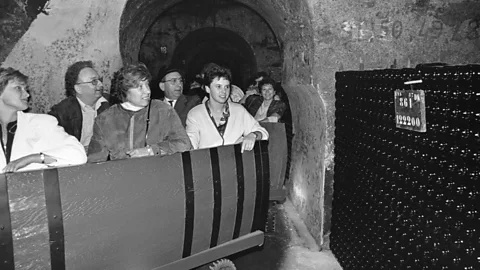
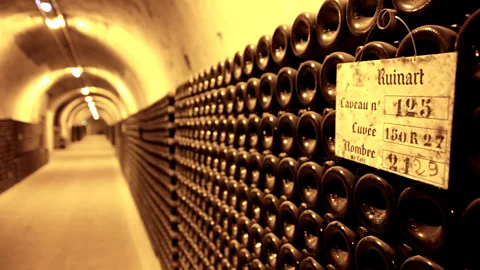
In the Champagne region, the Resistance literally went underground into the maze of 2,000-year-old crayères (chalk caves). Many of these caves are open to the public for tours today, such as the 8km warren beneath the Ruinart Champagne house in Reims, and are recognised as an Intangible World Heritage by Unesco.
During the war, Marquis Suarez d’Aulan, the head of the prized, 1785-established Champagne house Piper-Heidsieck, transformed his crayères into an arms depot, stockpiling rifles and grenades parachuted in by the Allies and destined for the Resistance. According to the French Armed Forces Ministry, this armed Resistance provided essential on-the-ground aid in the days leading up to and following the D-Day landings in Normandy, ambushing enemy troops attempting to reach the front lines, liberating major cities and containing enemy units in western ports.
The Nazi’s appetite for Champagne even aided the Allies in reconnaissance. Following a massive Champagne delivery to Romania just before Germany invaded it in 1940, the French Resistance enlisted the help of Champagne producers to keep close tabs on unusual orders. In 1941, the Resistance informed British intelligence of one such request for a large shipment of Champagne in heat-resistant packaging destined for “a very hot country”, cluing them in just before the beginning of the Nazis’ planned invasion of North Africa.
More like this:
• The top-secret meeting that helped win D-Day
• D-Day shipwrecks were a WW2 time capsule
• In pictures: 80th anniversary of D-Day
Champagne native Bernard de Nonancourt was only 19 when war broke out, but as Batonnet said, “He went into the Resistance as soon as war was declared.” He joined the network of the renowned Abbé Pierre, becoming a notable Resistance fighter long before he became the bold and innovative leader of his family’s Laurent-Perrier Champagne house. After the D-Day landings, de Nonancourt joined an armoured tank regiment and participated in the liberation of Dachau, as well as the raid on Hitler’s private mountaintop retreat, Eagle’s Nest, where he was the first to glimpse the tens of thousands of bottles the Nazis had amassed from Bordeaux to Cognac to his own native Champagne. He was awarded the Croix de Guerre for his service.
Many of these daring heroes paid the ultimate price. In attempting to help vineyard workers out of occupied territory, Bernard’s brother, Maurice de Nonancourt, was caught and sent to the Sachsenhausen concentration camp, where he died in 1945. Countless others, including Gaston Poittevin, head of the eponymous Champagne house, and legendary Champagne winemaker Henri Martin, suffered the same fate for their heroism.